Field Notes PrepGet the Visual Study Guide
For aspiring home inspectors preparing for the NHIE in the United States

Stop studying scattered facts. Learn how home inspection topics connect.

This illustrated PDF guide helps you review the systems, defects, safety concerns, and professional judgment topics that appear throughout NHIE preparation. It covers structure, roofing, exterior, electrical, plumbing, HVAC, interiors, reporting logic, and practice-style reasoning without copying real exam questions.

Get the Visual Study Guide

Secure checkout, PDF delivered by email, and a 7-day refund guarantee.

Built for visual learners

Diagrams, labeled callouts, and plain-English explanations help you see how components work instead of memorizing isolated terms.

Focused on inspection judgment

The guide explains how to spot unsafe conditions, material defects, reporting priorities, and the logic behind common exam-style decisions.

Independent and original

This is not affiliated with EBPHI or the NHIE, and it does not reproduce real exam questions or protected exam content.
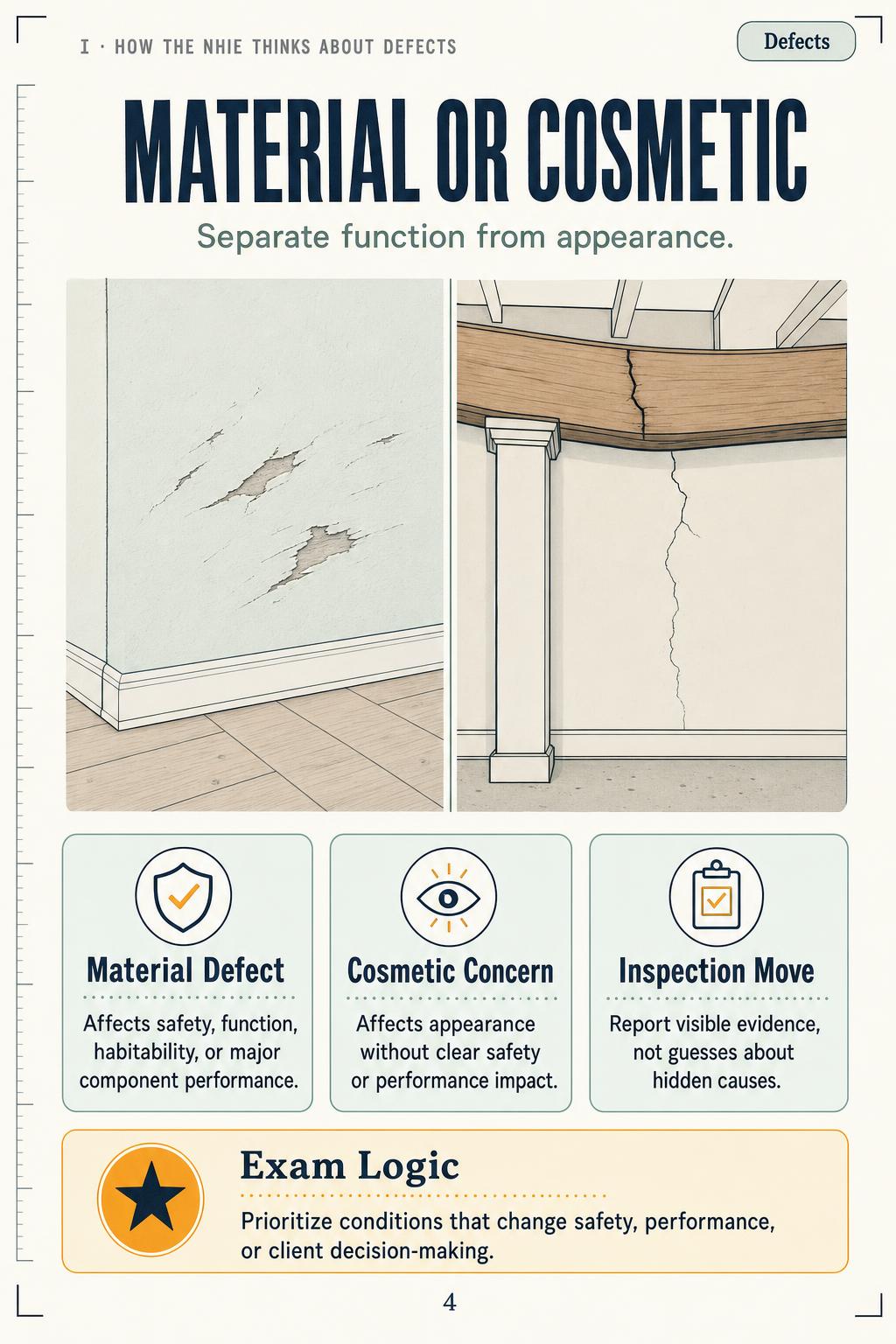
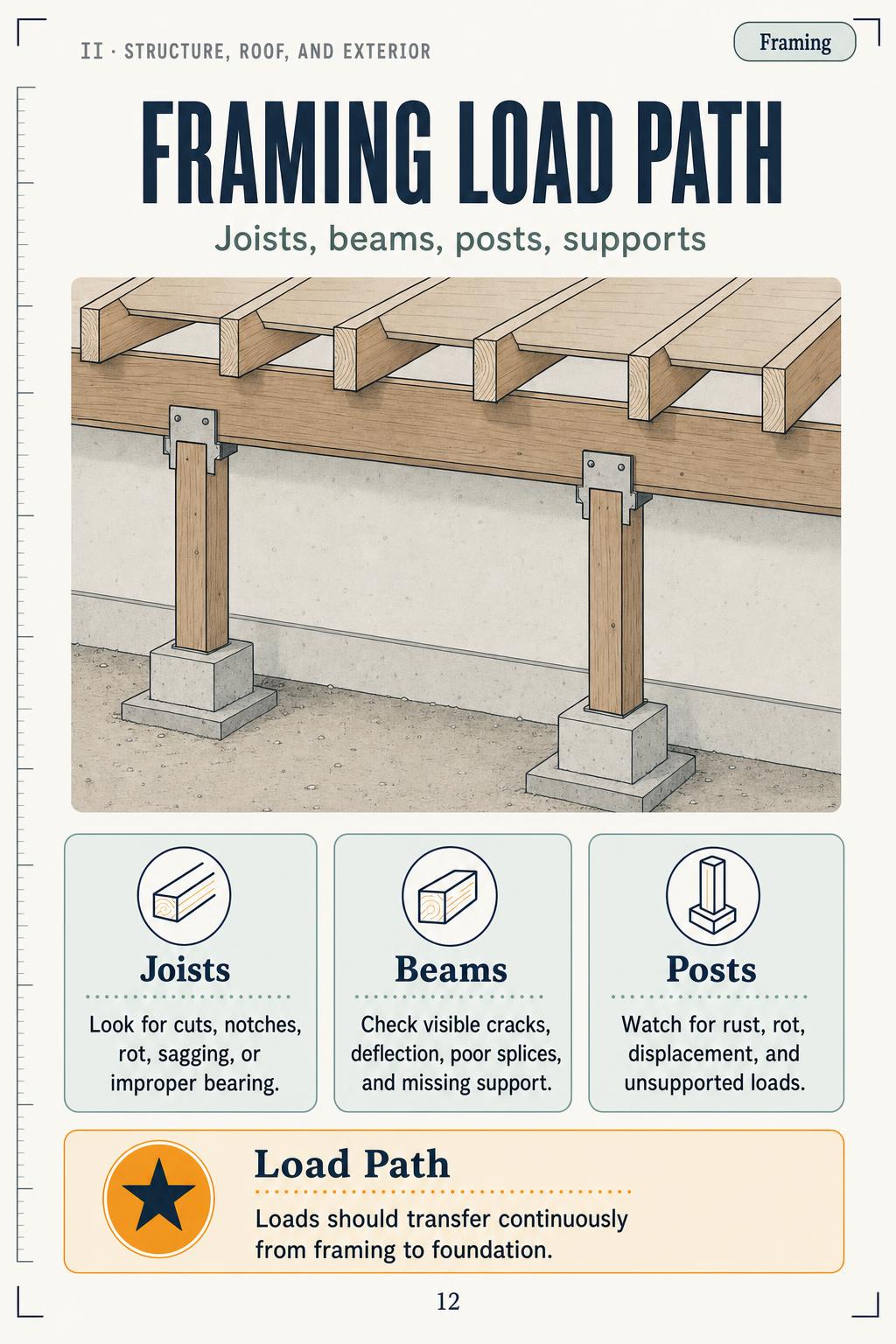
See how the guide feels before you study

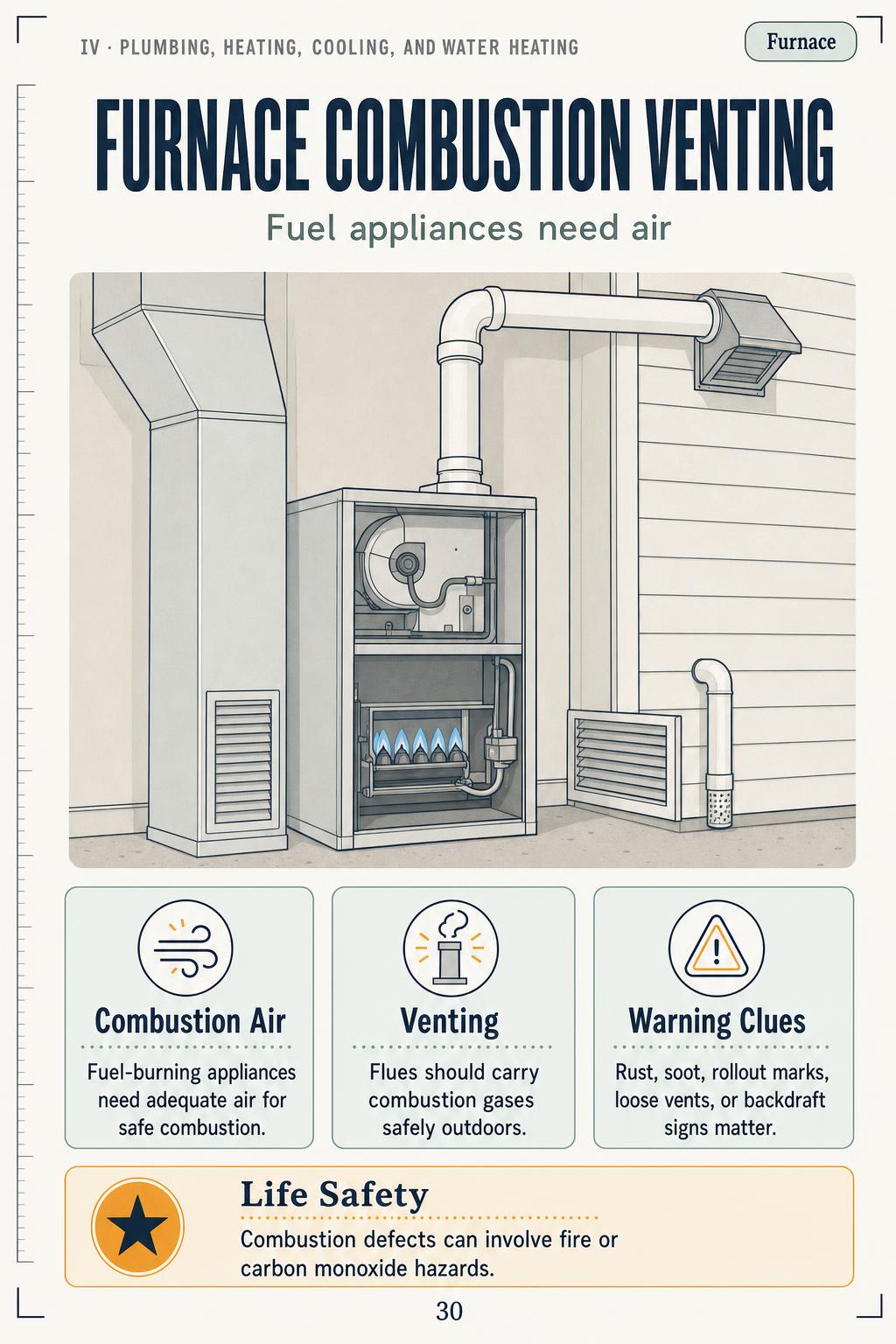
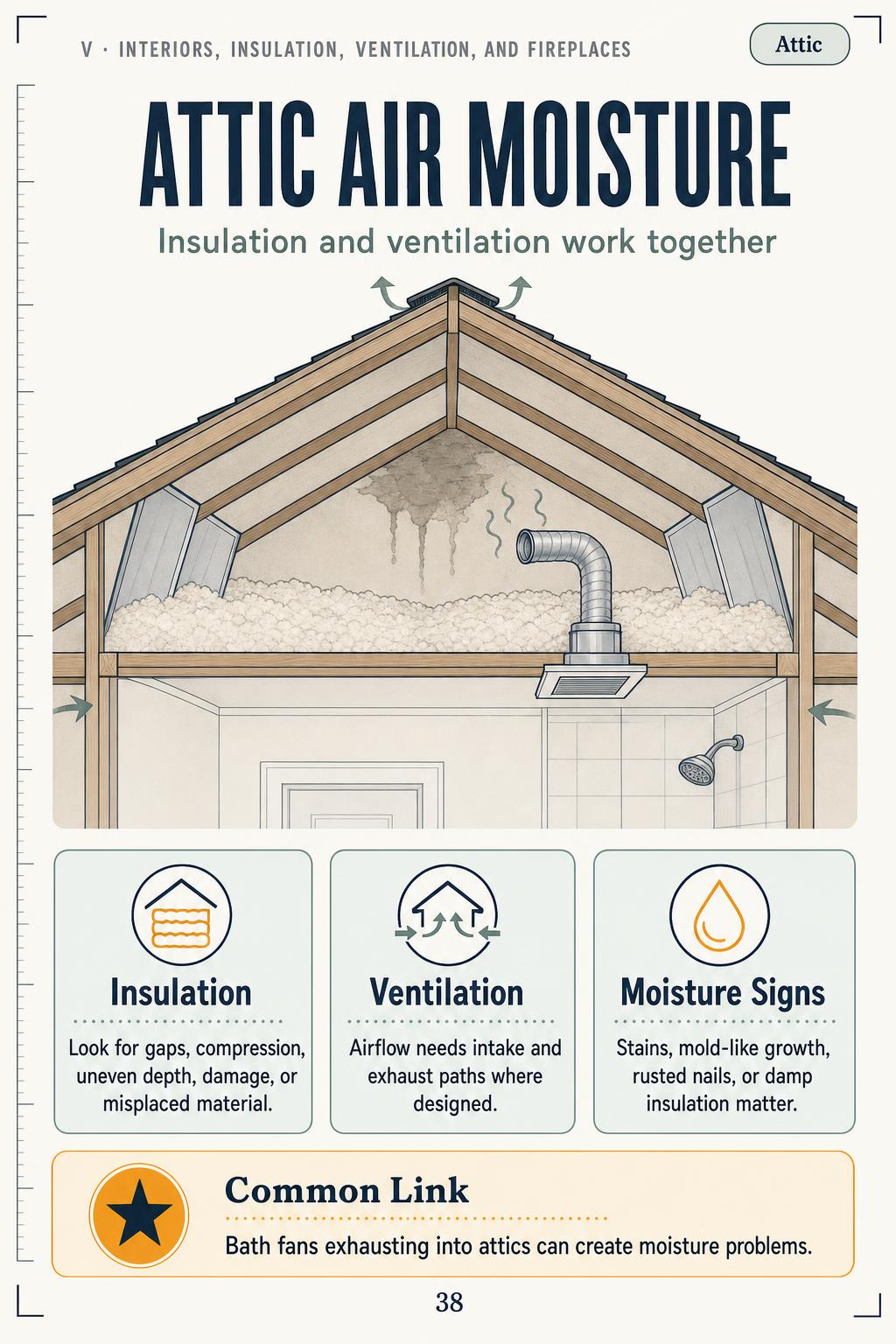
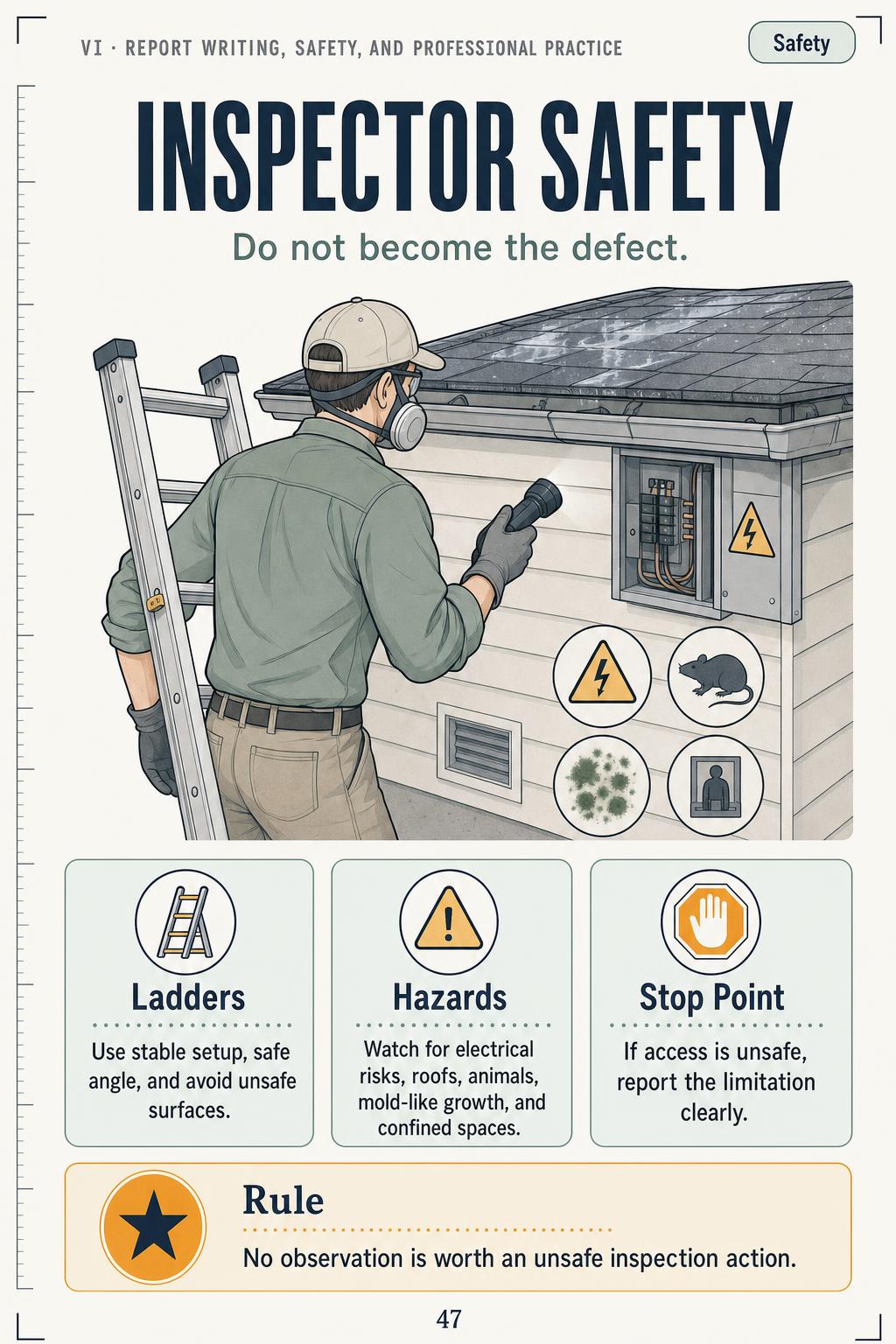
The sample pages show the actual style of the guide: clean diagrams, short explanations, defect examples, and quick review notes designed for focused study sessions.

Material Or CosmeticFraming Load PathGrounding And BondingFurnace Combustion VentingAttic Air MoistureInspector Safety

Sample pages are for preview only; the full PDF includes all sections listed below.

You sit down to study, but the material keeps spreading out

You open your laptop after work with every intention of getting serious about the NHIE.

One tab explains grounding. Another covers roof flashing. A video mentions combustion air. A forum thread argues about report wording. None of it feels connected.

You try to take notes, but the notes become a pile of definitions. You know a service panel has breakers, a roof has flashing, and a furnace has a flue, but the exam expects you to recognize what matters in an inspection scenario.

Then the pressure starts to build. You know the exam attempt is not something you want to repeat casually, and you do not want to walk in hoping scattered studying was enough.

That frustration is not your fault. Home inspection knowledge crosses many trades, and most study material explains one topic at a time instead of showing how systems, defects, safety, and reporting judgment fit together.

The difference is not more information. It is clearer structure.

Typical study material feels like this

  • Long text blocks that define terms without showing where they appear in the house.
  • Random topic lists that make plumbing, electrical, structure, and reporting feel unrelated.
  • Practice explanations that say the answer, but not the inspection logic behind it.

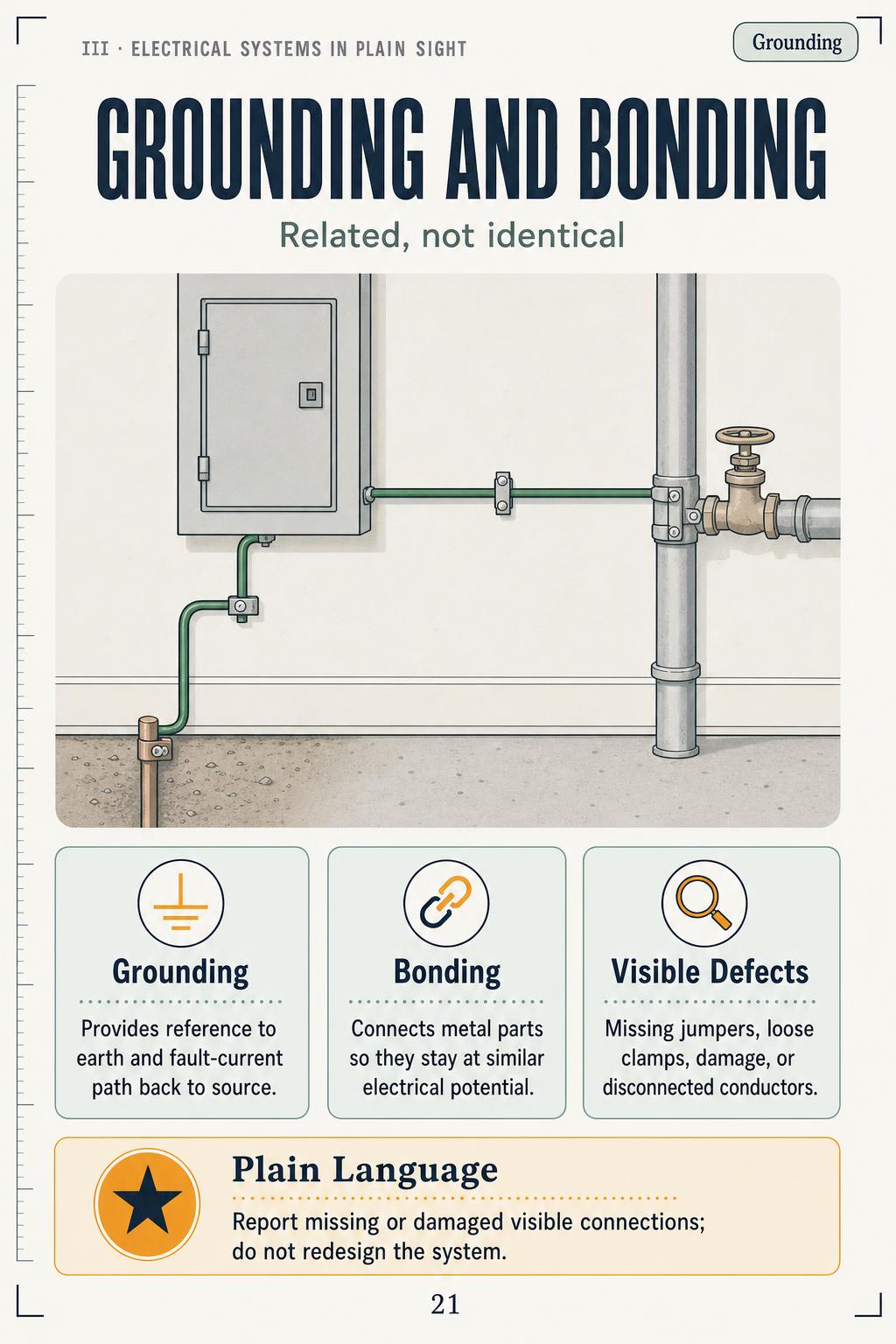
Bonding and grounding are related but separate concepts in residential electrical systems. Grounding provides a path for fault current to return to the source and helps stabilize voltage to earth, while bonding connects metal parts so they remain at the same electrical potential. Inspectors should identify visible defects such as missing bonding jumpers, improper grounding electrode connections, damaged conductors, and conditions that may require further evaluation by a qualified contractor.

This guide turns it into this

  • Visual layouts that show where components are found and what inspectors look for.
  • System-by-system study paths that connect defects, risks, and report language.
  • Practice-style reasoning that explains why one observation matters more than another.

A full table of contents for practical NHIE preparation

The guide is organized around the major systems and decision points a new inspector needs to understand. Each part is designed to help you review the subject, recognize common defects, and think through inspection scenarios more clearly.

IHow the NHIE Thinks About Defects

  • Material defect versus cosmetic concern
  • Safety hazard, performance issue, and maintenance item
  • When a condition should be reported
  • How to read scenario wording carefully
  • Common distractors in exam-style questions
  • Limitations and inaccessible areas

IIStructure, Roof, and Exterior

  • Foundation movement clues and cracks
  • Floor framing, joists, beams, and posts
  • Roof covering wear and damage patterns
  • Flashing, valleys, penetrations, and drainage
  • Gutters, grading, downspouts, and site water
  • Siding, trim, decks, porches, and stairs
  • Garage doors, exterior safety, and access points

IIIElectrical Systems in Plain Sight

  • Service entrance and main disconnect basics
  • Panelboards, breakers, labeling, and clearances
  • Grounding and bonding in inspection language
  • Overcurrent protection and conductor concerns
  • GFCI and AFCI protection locations
  • Receptacles, polarity, open grounds, and covers
  • Common unsafe electrical observations

IVPlumbing, Heating, Cooling, and Water Heating

  • Water supply materials and visible shutoffs
  • Drain, waste, and vent clues
  • Leaks, traps, slope, and cross-connection concerns
  • Furnace basics, combustion air, and venting
  • Heat pumps, air conditioners, and condensate drainage
  • Ducts, filters, returns, and distribution issues
  • Water heaters, temperature relief valves, and discharge piping

VInteriors, Insulation, Ventilation, and Fireplaces

  • Wall, ceiling, and floor clues
  • Windows, doors, egress, and safety glass
  • Stairs, railings, guards, and trip hazards
  • Attic insulation, ventilation, and moisture signs
  • Crawlspace conditions and vapor control
  • Bathrooms, kitchens, appliances, and exhaust
  • Fireplaces, chimneys, hearths, and visible defects

VIReport Writing, Safety, and Professional Practice

  • Clear defect statements
  • Recommendation wording and further evaluation
  • Scope of inspection and exclusions
  • Client communication without overpromising
  • Personal safety during the inspection
  • Ethics, conflicts, and professional boundaries

VIIVisual Review Sheets and Practice-Style Logic

  • System-by-system visual recap pages
  • Defect priority review
  • Safety concern review
  • Scenario reading checklist
  • Practice-style prompts with original explanations
  • Final study planning notes

Imagine sitting down to study and knowing what to do next

You open the PDF and start with one section instead of chasing another random video or article.

A diagram shows the component, the short explanation tells you what it does, and the defect notes explain what would make it important during an inspection.

When you move from roofing to structure, or from electrical to HVAC, the guide keeps the same format so your notes feel organized instead of scattered.

You begin to recognize patterns: safety concern, performance issue, limitation, referral, reportable defect. The material starts to feel like inspection judgment, not just vocabulary.

By the time you review practice-style logic, you are not trying to memorize a trick. You are practicing how to read the scenario and identify the most inspection-relevant issue.

Get the Visual Study Guide

What you get inside the guide

I

How the NHIE Thinks About Defects

This opening part explains how to study for inspection judgment instead of memorizing random facts. After it, you can separate safety concerns, material defects, limitations, normal wear, and referral situations more confidently.

II

Structure, Roof, and Exterior

This part covers the visible systems that protect and support the house. After it, you can review common structural, roof, drainage, siding, and exterior concerns with a clearer inspection framework.

III

Electrical Systems in Plain Sight

This part turns electrical review into visible inspection checkpoints. After it, you can recognize the purpose of panels, conductors, grounding, bonding, protection devices, and common visible defects.

IV

Plumbing, Heating, Cooling, and Water Heating

This part connects the major mechanical systems to the defects inspectors commonly report. After it, you can study supply, drainage, venting, fuel, combustion, cooling, and water heating topics as related inspection systems.

V

Interiors, Insulation, Ventilation, and Fireplaces

This part reviews interior observations that often point to moisture, safety, installation, or performance issues. After it, you can connect stains, ventilation, insulation, stairs, windows, doors, and fireplaces to inspection reporting decisions.

VI

Report Writing, Safety, and Professional Practice

This part explains the communication side of the inspection process. After it, you can better identify what belongs in a report, how limitations affect conclusions, and why clear wording matters.

VII

Visual Review Sheets and Practice-Style Logic

This final study part helps you review across systems and practice reasoning without using real exam questions. After it, you can use the summary pages to revisit weak areas and think through scenario-based prompts more calmly.

The guide ends with a calm final review plan so you can organize your remaining study time without bouncing between unrelated resources.

Plus, included free

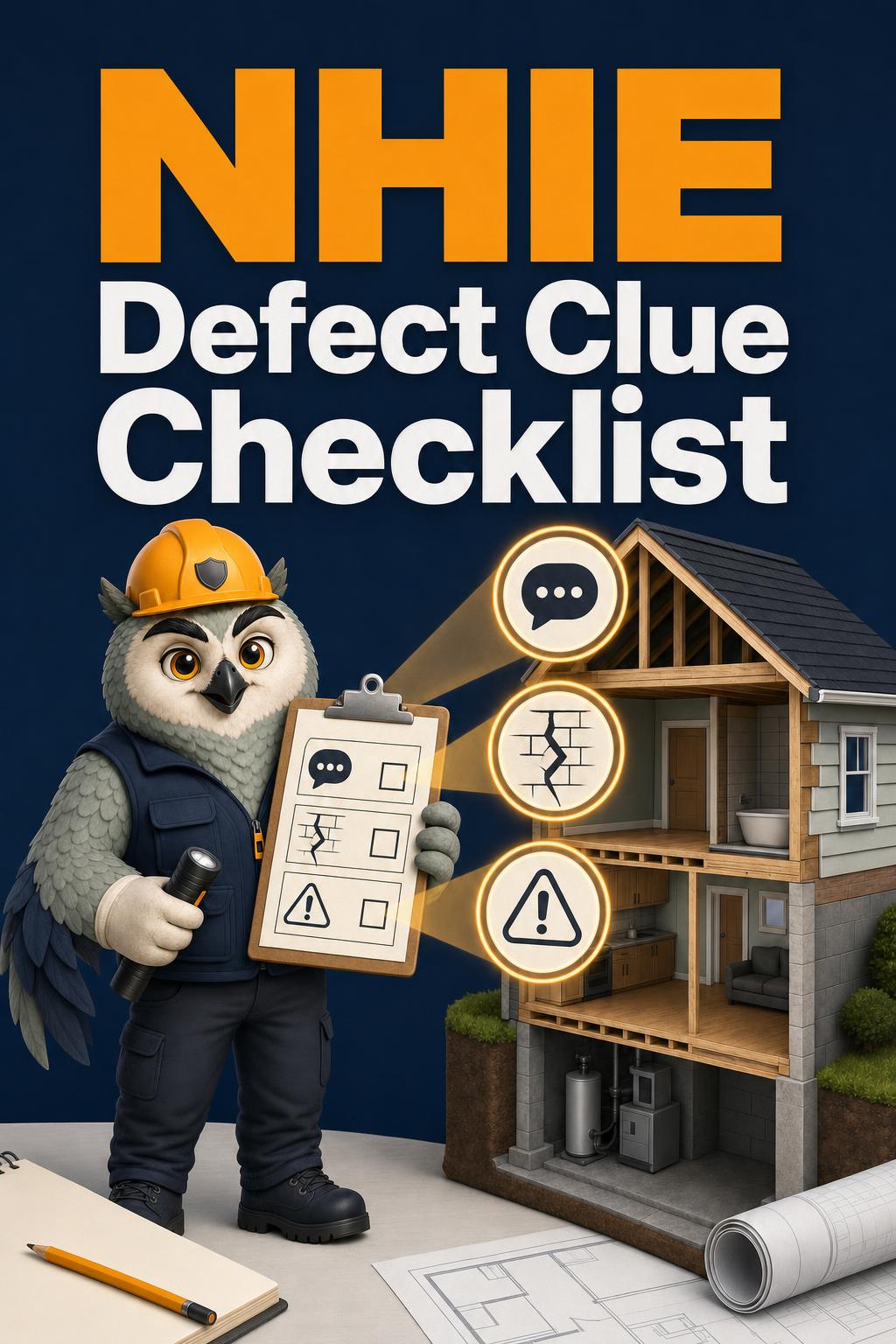
NHIE Defect Clue Checklist
A quick visual checklist for spotting wording clues, condition clues, and safety red flags in practice questions.
Free with your purchase · 4 pages
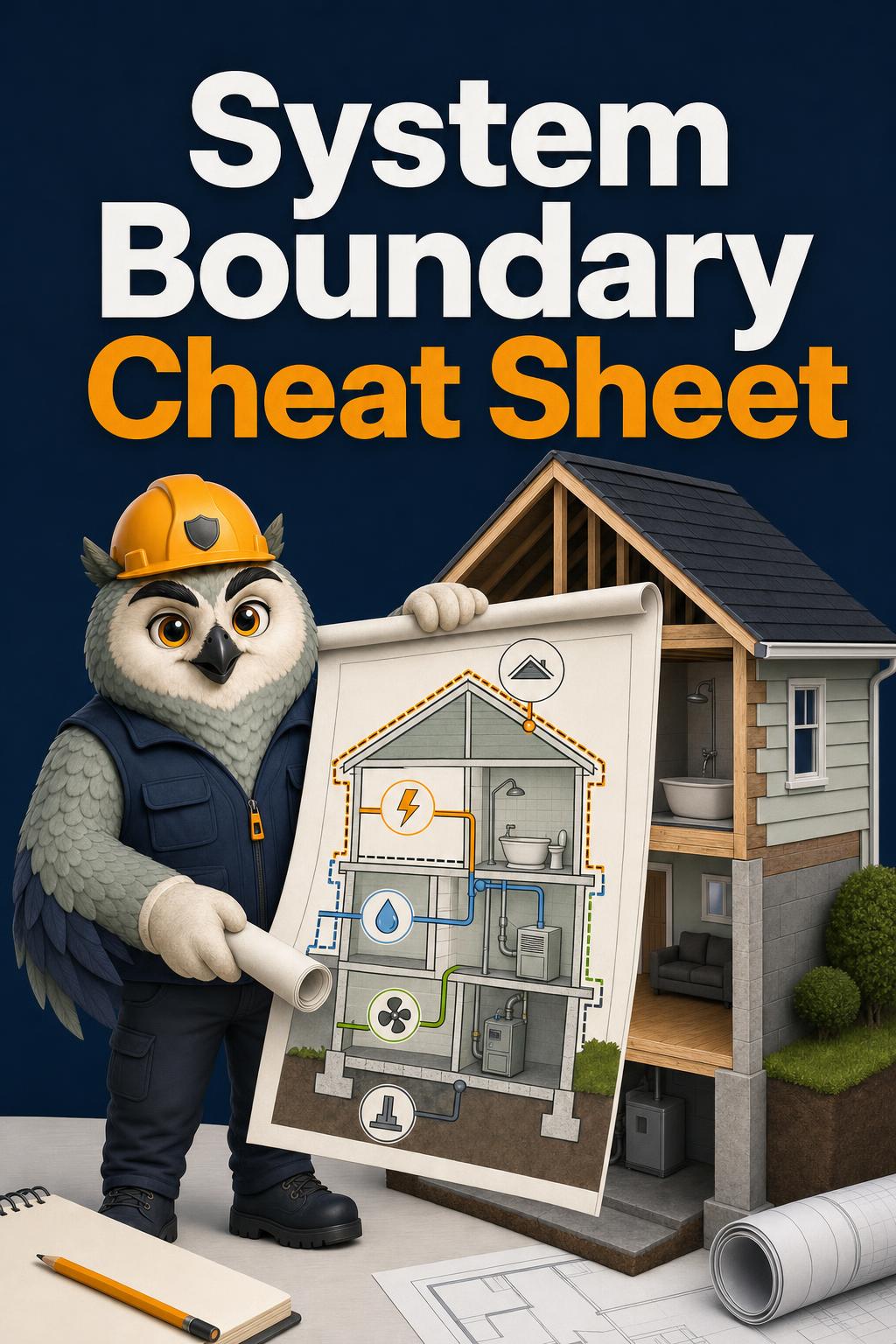
System Boundary Cheat Sheet
A compact reference for remembering where major home systems start, stop, connect, and commonly fail.
Free with your purchase · 5 pages
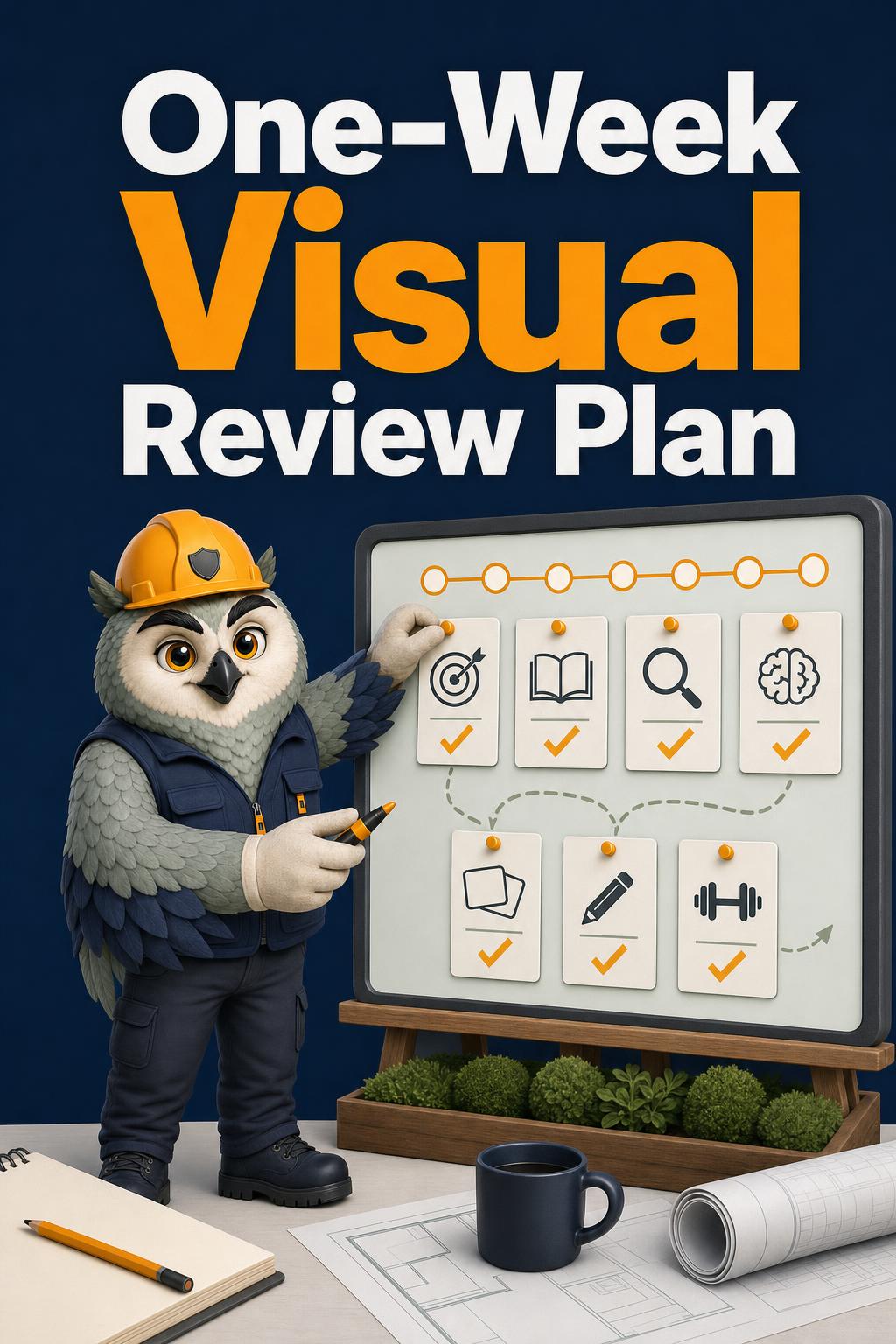
One-Week Visual Review Plan
A simple day-by-day review plan that helps organize your final study sessions without adding more complexity.
Free with your purchase · 6 pages
Get the guide and the bonuses

Is this guide a fit for you?

Yes, if you want

  • A visual study companion for NHIE preparation.
  • Plain-English explanations of major home systems.
  • Help connecting defects, safety, and reporting logic.
  • An independent guide that does not rely on real exam questions.

Not the right fit if you want

  • An official EBPHI or NHIE publication.
  • A promise that you will pass the exam.
  • A replacement for required field training, licensing rules, or hands-on practice.

Included with your order

The Visual NHIE Study Guide

  • The complete illustrated NHIE study guide PDF.
  • A structured table of contents for system-by-system review.
  • Original practice-style reasoning pages.
  • Visual recap sheets for quick review sessions.

Get the complete guide

US$ 33.70
Get the Visual Study Guide

After purchase, the guide arrives by email within a few hours, so you can save the PDF and study on your preferred device.

Protected by a 7-day refund guarantee

You have 7 days to review the guide. If it is not the right study companion for you, contact us within that window and you will receive a full refund.

Questions before you order

Is this an official NHIE or EBPHI product?

No. This is an independent study guide and is not affiliated with, endorsed by, or approved by EBPHI or the NHIE.

Does the guide include real exam questions?

No. It uses original explanations and practice-style reasoning prompts only. It does not reproduce real exam questions or protected exam content.
What format do I receive?

You receive a PDF guide by email. You can save it to your computer, tablet, or phone.

When will the guide arrive?

The guide is sent by email within a few hours of purchase. Please check your inbox and spam or promotions folder if you do not see it.

Can I use it on my phone or tablet?

Yes. Any device that opens PDF files should work, though the illustrations are easiest to study on a tablet, laptop, or desktop screen.

Is this for beginners or retakers?

Both. Beginners can use it to build a clearer foundation, and retakers can use it to organize weak areas and review the logic behind inspection topics.

Can I print the guide?

Yes, you may print a personal copy for your own study. The file is for individual use and should not be shared or resold.

How does the refund work?

The guide is covered by a 7-day refund guarantee. If it is not a good fit, contact us within 7 days and we will issue a full refund.

Give your study sessions a clearer path

If your NHIE prep feels scattered, this visual guide gives you one organized place to review the systems, defects, and inspection reasoning you need to understand.

Get the Visual Study Guide

Secure checkout, PDF delivered by email, and a 7-day refund guarantee.